Cobbler's Crossing Neighborhood Guide
Cobbler's Crossing is a family-oriented subdivision community tucked into Elgin's southwest corner, bounded by Big Timber Road, US 20, McLean Boulevard, and Randall Road. Built largely in the early 2000s, the neighborhood delivers the hallmarks of its era: similar floor plans, attached garages, and cul-de-sacs that keep through traffic minimal and give kids room to ride bikes without much concern. The housing stock is newer relative to much of Elgin proper, offering a practical alternative for buyers who want recent construction without venturing further west toward Huntley. The tradeoff is a landscape still catching up with itself, where young trees offer little canopy cover and air conditioning carries more of the summer workload than most residents would prefer. What Cobbler's Crossing lacks in character quirks it makes up for in consistency and community investment, drawing households who know their neighbors by name and show up for the annual garage sale.
Where Quiet Streets Do the Heavy Lifting
🧭Generally defined as the area: South of Big Timber Road, north of US 20, west of McLean Boulevard, and east of Randall Road in Elgin’s southwest corner
📌Cobbler’s Crossing is best known for: Early 2000s subdivisions with similar floor plans, attached garages, and that unmistakable new(ish) suburb feel
👕You’ll fit in if: You own a minivan or SUV, know your neighbors by first name, and help coordinate the annual neighborhood garage sale
👍Move here for: Newer construction without having to push all the way out to Huntley or beyond
👎Don’t say we didn’t warn you about: A lack of mature trees means summer shade is limited and AC bills can climb
✨The general vibe is: A suburban starter pack brought to life, practical, predictable, and very family-forward
Pros & Cons of Cobbler's Crossing
Cobbler's Crossing strengths (top 5)



Cobbler's Crossing tradeoffs (top 3)


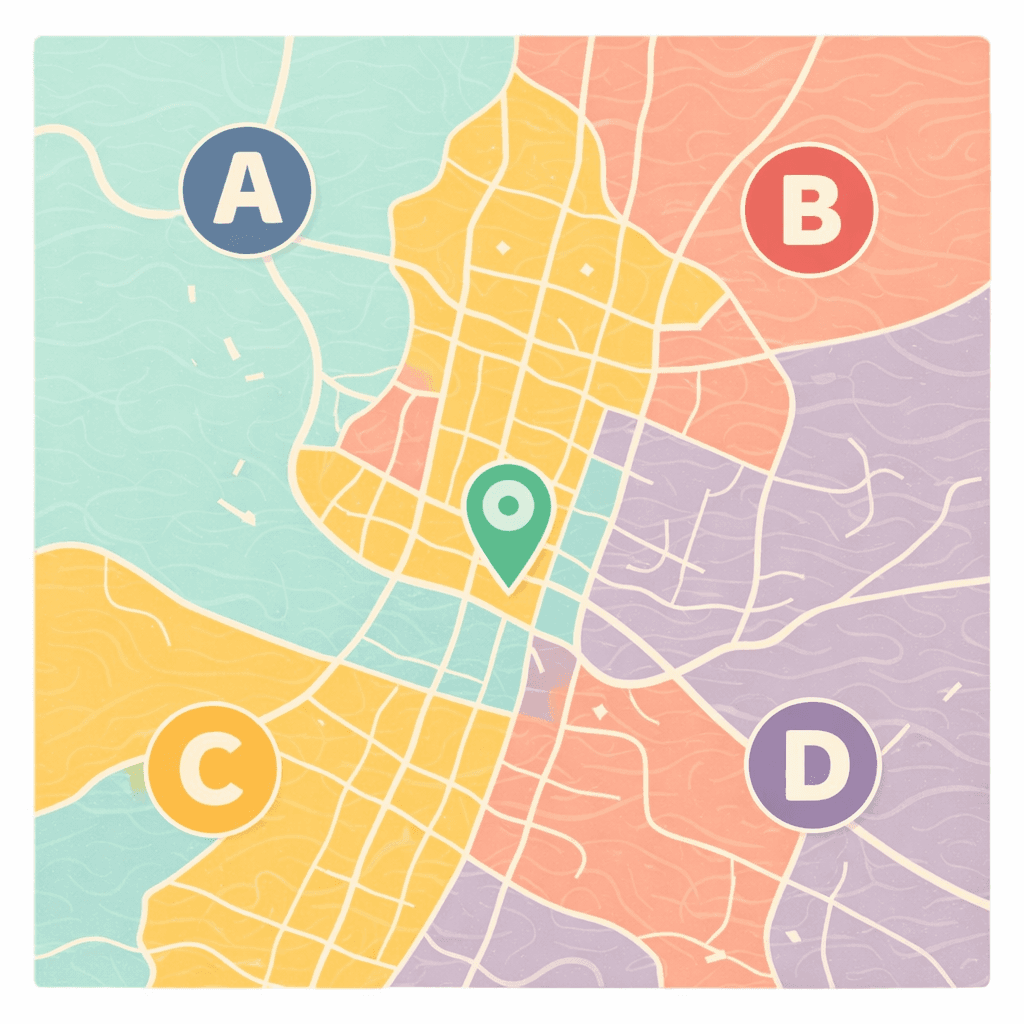
Which Elgin neighborhood should you live in?
Answer a few quick questions and we'll show you your best matches.
Cobbler's Crossing Neighborhood DNA

Families who genuinely believe cul-de-sacs equal safety, bikes in the street, and fewer random cars passing through